All Natural Dry Cleaners: Ultimate Safe 2025
What’s Really in Your “Dry Clean Only” Garments?
All natural dry cleaners use eco-friendly methods like professional wet cleaning, liquid CO2, or silicone-based solvents instead of toxic chemicals like perchloroethylene (perc). These alternatives are safer for your health and the environment while effectively cleaning delicate fabrics.
Quick comparison of natural dry cleaning methods:
| Method | Solvent Used | Environmental Impact | Health Safety |
|---|---|---|---|
| Wet Cleaning | Water + biodegradable detergents | Lowest impact, EPA-approved | Non-toxic, hypoallergenic |
| Liquid CO2 | Recycled carbon dioxide | No hazardous waste | Completely safe |
| Silicone-Based | Siloxane (breaks down to sand/water) | Low VOCs, gentler | Non-toxic to humans |
| Hydrocarbon | Petroleum-based | Better than perc, but still VOCs | Safer than perc, flammable |
You’ve probably noticed that chemical smell on your freshly dry-cleaned clothes. That’s perchloroethylene, or “perc”—a toxic chemical used by more than 85 percent of traditional dry cleaners in the United States. This same substance is classified by the EPA as a likely carcinogen and has contaminated the soil beneath at least 75% of dry cleaning facilities.
The good news? The dry cleaning industry is changing. California banned perc machines in 2023, and the EPA has issued federal restrictions on similar toxic solvents. More importantly, proven alternatives exist that clean your clothes just as effectively—or better—without putting your health or the environment at risk.
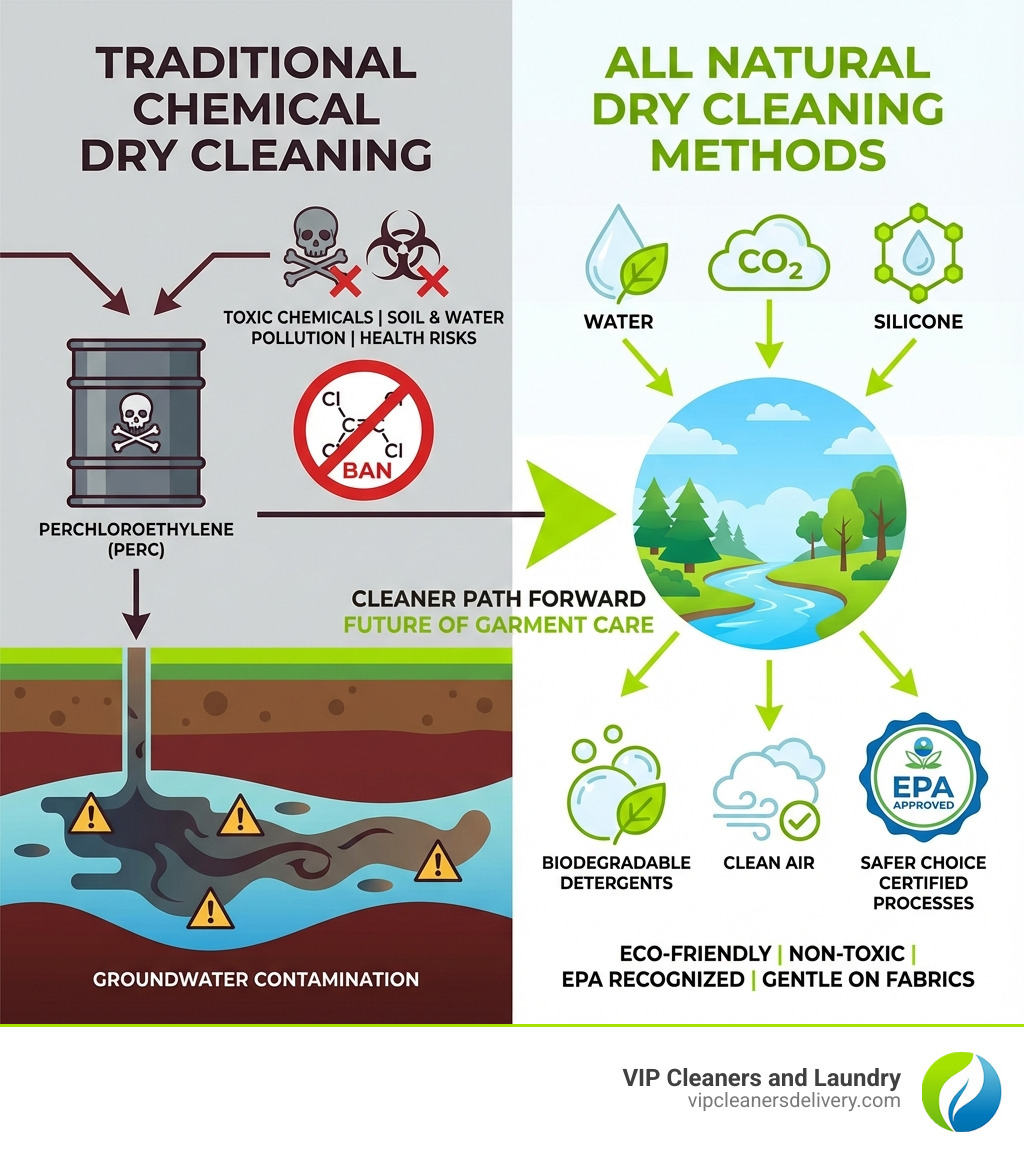
Traditional dry cleaning involves soaking your garments in chemical solvents that can cause headaches, dizziness, and long-term health problems. These same chemicals seep into groundwater, contaminate soil for miles, and contribute to air pollution. The manufacturing process is energy-intensive and creates greenhouse gas emissions.
But there’s a cleaner path forward.
I’m Salvador Villarreal, and with over 25 years of experience in the dry cleaning industry, I’ve witnessed the shift toward all natural dry cleaners and have implemented cutting-edge eco-friendly technologies at VIP Cleaners and Laundry. Throughout my career, I’ve helped thousands of San Diego residents find that protecting their wardrobe doesn’t mean sacrificing their health or the environment.
All natural dry cleaners terms made easy:
The Hidden Dangers of Traditional Dry Cleaning
When we talk about traditional dry cleaning, we’re often discussing methods that rely on harsh chemical solvents, primarily perchloroethylene (perc) and, historically, trichloroethylene (TCE). While these chemicals have been effective at dissolving grease and stains, their environmental and health costs are alarmingly high.
Perchloroethylene, or perc, is a synthetic volatile organic compound (VOC) that has been the industry standard for decades. However, its widespread use has come with significant consequences. The EPA classifies perc as a likely human carcinogen, and exposure to it has been linked to various health problems, including respiratory ailments, bladder and kidney cancers, damage to reproductive organs, and harm to the nervous and immune systems. Imagine bringing home clothes that have been steeped in a chemical capable of causing such severe health issues. The faint, distinctive “dry cleaning smell” on your garments is often the tell-tale sign of residual perc.
Beyond human health, the environmental contamination caused by perc is staggering. Studies estimate that at least 75% of dry cleaners have perc contamination under their businesses, with plumes that can stretch for miles under homes, businesses, and even hospitals. This happens because perc, through misuse or accidental spills, can leak down through floors and pollute soil and groundwater. It can also volatilize from a liquid into a gas, seeping back up through cracks in foundations into properties. This groundwater pollution and soil contamination are long-lasting environmental disasters.
Trichloroethylene (TCE) is another highly toxic carcinogen that was historically used in the industry. Fortunately, regulatory actions are pushing these dangerous chemicals out of circulation. The California Air Resources Board (CARB) issued a statewide ban on perc in 2023, requiring all perc machines to be out of service. Federally, the Toxic Substances Control Act under the EPA has issued bans on TCE by September 2025. These bans reflect a growing understanding of the severe risks these chemicals pose and a commitment to a healthier, more sustainable future.
Traditional dry cleaning also carries an energy burden. The process, which involves heating solvents to clean clothes, is energy-intensive and contributes to greenhouse gas emissions, further impacting our planet. It’s clear that for the sake of our health and the environment, a departure from these traditional methods is not just desirable, but necessary.
The Rise of All Natural Dry Cleaners: Safer Alternatives Explained
The good news is that the dry cleaning industry is rapidly evolving, moving away from toxic chemicals towards safer, more sustainable practices. This shift has given rise to what we call all natural dry cleaners, who use a range of innovative methods that protect both your garments and our planet. However, it’s important to understand the nuances of these alternatives, as not all “green” claims are created equal. We’ve seen a lot of “greenwashing” in the industry, where businesses use vague terms to sound eco-friendly without actually adopting truly safe methods.
To help you steer this cleaner landscape, here’s a comparison of the main eco-friendly dry cleaning methods:
| Method | Solvent Used | Environmental Impact | Health Safety | Effectiveness | Typical Cost (Relative) |
|---|---|---|---|---|---|
| Wet Cleaning | Water + biodegradable detergents | Lowest impact, EPA-approved | Non-toxic, hypoallergenic | High for most fabrics | Lower than traditional |
| Liquid CO2 | Recycled carbon dioxide | No hazardous waste, circular economy | Completely safe | High, especially for delicates | Higher (due to equipment) |
| Silicone-Based | Siloxane (D5) | Low VOCs, breaks down to sand/water/CO2 | Non-toxic to humans | High | Similar to traditional |
| Hydrocarbon | Petroleum-based | VOC contributor, less toxic than perc | Safer than perc, flammable | Moderate to High | Similar to traditional |
For more detailed information on how we prioritize your health and the environment, you can explore more info about our eco-friendly methods.
Professional Wet Cleaning
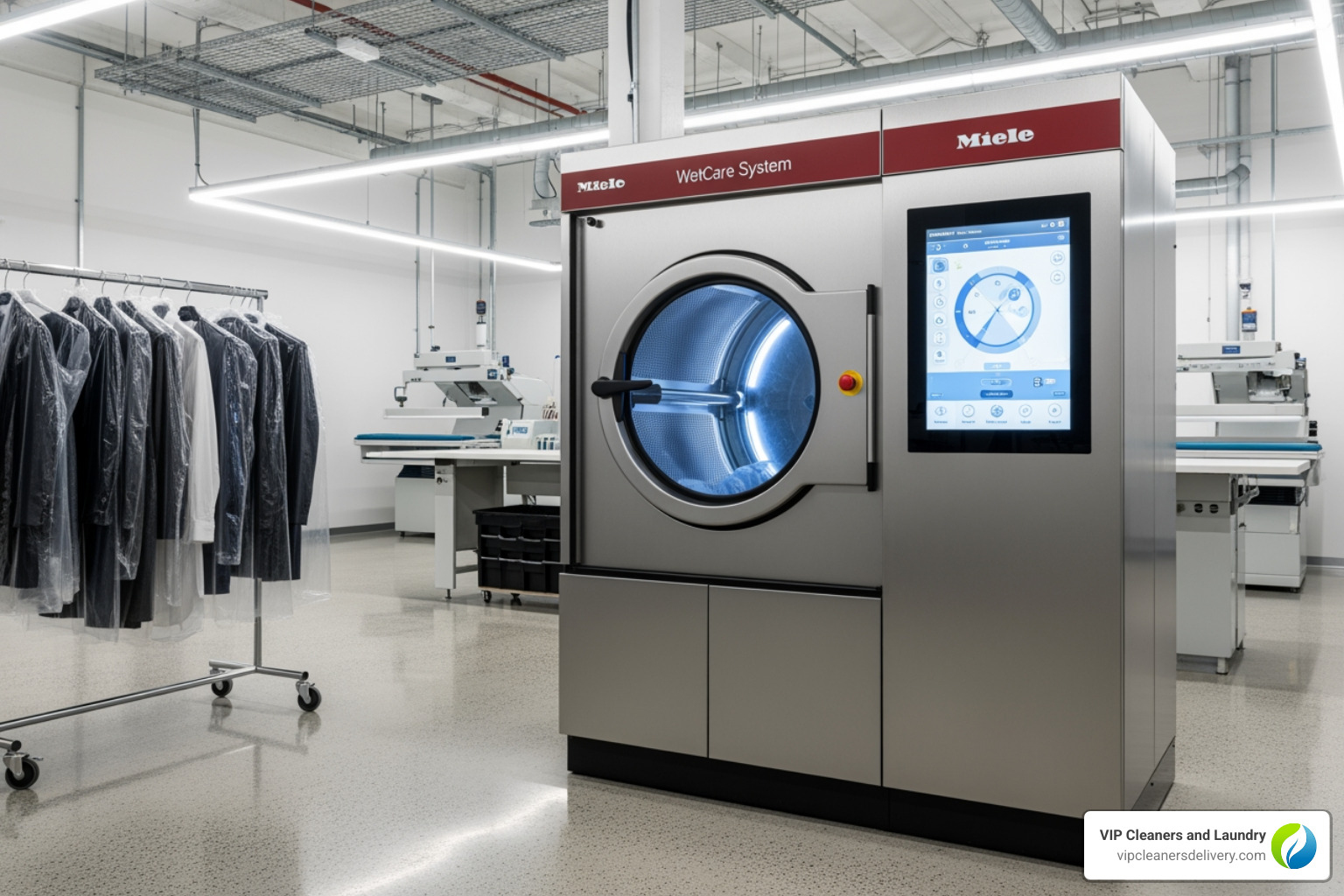
Professional wet cleaning stands out as one of the most genuinely eco-friendly alternatives. Far from simply “washing” clothes at home, this method uses highly sophisticated, computer-controlled machines, like the German-engineered Miele Wet Cleaning Machines, that precisely control water levels, temperature, and agitation. This allows us to clean garments using minimal amounts of water and safe, biodegradable detergents.
The role of professional wet cleaning as an alternative to traditional dry cleaning is paramount. It’s recognized by the EPA as one of the most environmentally friendly options available. This method is incredibly gentle, making it perfect for delicate fabrics like silk, wool, and rayon that might otherwise be damaged by harsh chemicals or aggressive home laundering. The computer-controlled process tailors the cleaning cycle to each garment’s specific needs, assessing stain types and fabric composition to determine the exact combination of water, machine movement, temperature, and detergent. This precision not only ensures effective cleaning but also contributes to water and energy efficiency, often being more efficient than traditional dry cleaning. The result? Garments that are truly clean, soft, and fresh, without any chemical residue or odor.
- Pros: Lowest environmental impact, non-toxic, hypoallergenic, excellent for delicate fabrics, energy-efficient, often lower cost than traditional dry cleaning.
- Cons: Requires specialized equipment and highly trained operators, not suitable for all garment types (though very few).
Liquid Carbon Dioxide (CO2) Cleaning
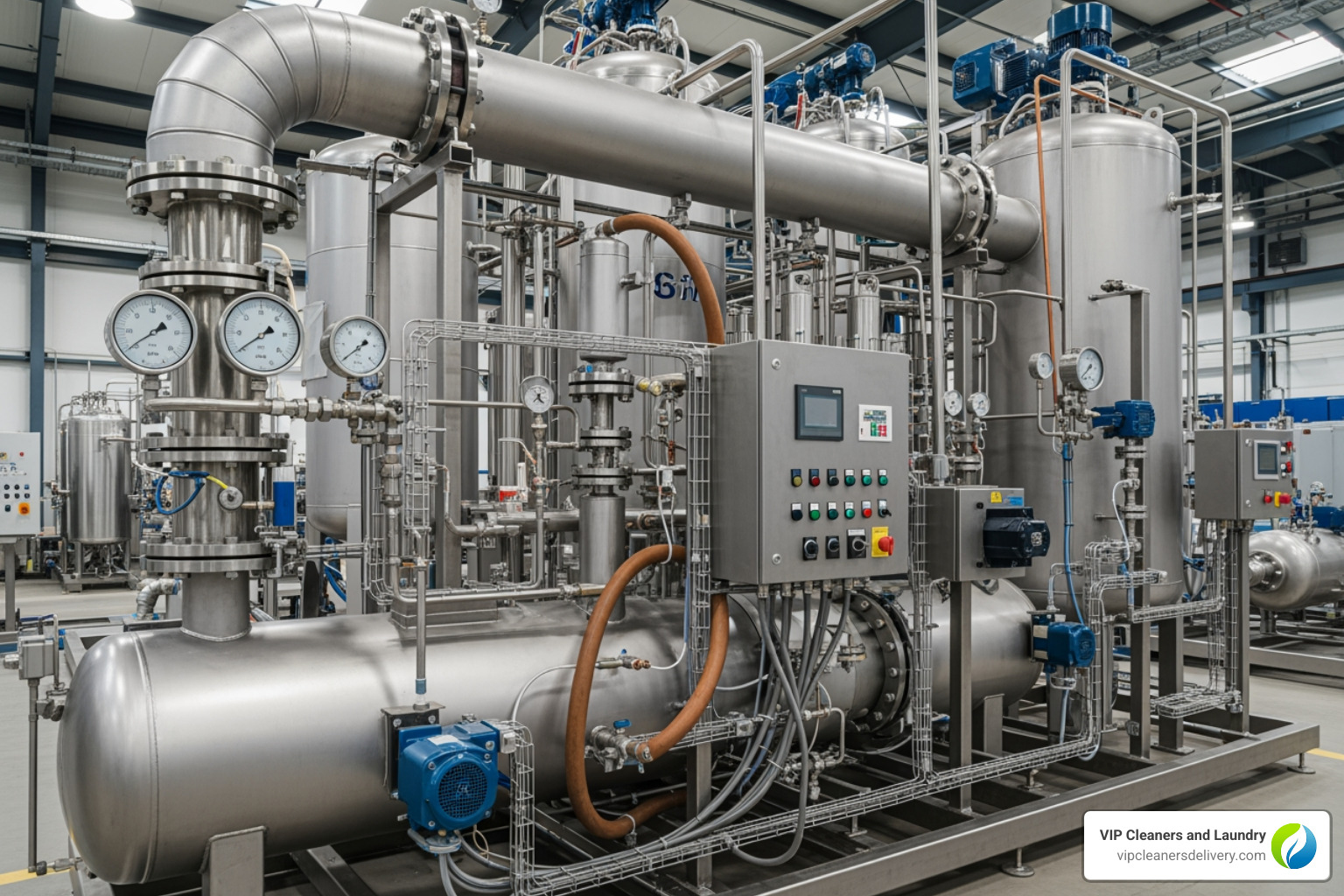
Another highly effective and environmentally sound method is liquid carbon dioxide (CO2) cleaning. This innovative process uses CO2, a naturally occurring, non-toxic, and non-flammable gas, as the cleaning solvent. The CO2 is pressurized into a liquid state, where it effectively dissolves dirt and oils from garments.
What makes liquid CO2 cleaning particularly remarkable is its “circular economy” aspect. The CO2 used in the process is often recovered and reused, meaning virtually no hazardous waste is generated or released into the environment. This method is incredibly gentle on clothes, preserving colors and textures, and leaves no chemical odor or residue. It’s an excellent choice for delicate items and those sensitive to chemicals.
- Pros: Non-toxic, non-flammable, no hazardous waste, excellent for delicate garments, leaves no chemical residue or odor, good for the environment as CO2 is recycled.
- Cons: Requires very expensive, specialized machinery, which can make it a less common option for smaller cleaners and potentially impact overall service cost.
Silicone-Based Solvents (GreenEarth)
Silicone-based solvents, often marketed under brand names like GreenEarth, use a liquid silicone compound called siloxane (specifically D5). This clear, odorless fluid is essentially a byproduct of sand, and it’s chemically inert, meaning it doesn’t interact with fabric fibers. It merely acts as a carrier for detergents, lifting dirt and oils away.
The environmental appeal of silicone-based solvents lies in their breakdown. When released into the environment, siloxane D5 typically breaks down into sand, water, and trace amounts of CO2, which are relatively harmless. It is not considered a VOC (Volatile Organic Compound) in the same way perc or hydrocarbon solvents are. Garments cleaned with silicone feel soft, look bright, and have no chemical smell.
- Pros: Odorless, gentle on fabrics, breaks down into natural components, non-toxic to humans.
- Cons: While better than perc, some critics point out that its manufacturing process can involve chlorine, and it does release CO2, a greenhouse gas, upon breakdown. Some sources claim it may be carcinogenic.
Hydrocarbon Solvents
Hydrocarbon solvents, such as DF-2000, are often marketed by “organic” dry cleaners. While they are petroleum-derived and thus carbon-based (making them “organic” in a chemical sense), this labeling can be misleading for consumers seeking truly natural or eco-friendly options. They are still Volatile Organic Compounds (VOCs) and contribute to smog.
While hydrocarbon solvents are less toxic than perc, they are still flammable and require careful handling. They represent a step up from perc in terms of safety and environmental impact, but they are generally considered the least “green” option among the alternatives discussed here. Some sources even classify DF-2000 as a neurotoxin.
- Pros: Less toxic than perc, generally effective at cleaning.
- Cons: Petroleum-based, flammable, contributes to VOCs and smog, still a chemical solvent with potential health concerns.
How to Spot a Truly Green Cleaner
In the evolving landscape of garment care, distinguishing genuinely eco-friendly dry cleaners from those engaging in “greenwashing” is crucial for consumers in San Diego. Greenwashing occurs when a company deceptively markets itself as environmentally friendly without truly adopting sustainable practices.
What to Look for in All Natural Dry Cleaners
When searching for all natural dry cleaners, here’s what to consider:
- Solvent Disclosure: A truly green cleaner will be transparent about the solvents they use. Don’t be afraid to ask! If they use terms like “organic” without further explanation, press for specifics. As we’ve learned, “organic” can still mean petroleum-based hydrocarbons. Look for clear statements about professional wet cleaning, liquid CO2, or specific silicone-based solvents.
- Waste Disposal Practices: Inquire about how they dispose of their waste. Truly eco-friendly cleaners will have robust systems for managing wastewater, recycling solvents (like CO2), and minimizing their overall environmental footprint.
- Water Conservation and Energy Use: While wet cleaning uses water, modern systems are designed for efficiency. Ask about their water conservation efforts and whether they use renewable energy or energy-efficient equipment.
- Certifications and Standards: Look for third-party certifications or adherence to recognized environmental standards. While there isn’t one universal “organic dry cleaning” certification, some methods (like professional wet cleaning) are recognized by the EPA for their low environmental impact. The EPA’s Safer Choice label, though not for dry cleaning directly, indicates a commitment to safer chemical ingredients.
- Community Involvement: Beyond cleaning, does the business demonstrate a broader commitment to sustainability? Things like recycling programs for hangers and garment bags, or partnerships with local environmental initiatives, can be good indicators. For instance, some cleaners partner with local charities to clean and donate unclaimed or donated clothing, extending the lifecycle of garments.
- Vague Marketing Terms: Be wary of vague terms like “earth-friendly,” “natural,” or “environmentally safe” without concrete explanations of how they achieve this. A truly green cleaner will proudly detail their specific methods and their benefits.
At VIP Cleaners and Laundry, we believe in full transparency. We openly discuss our eco-friendly cleaning methods, which prioritize your health and the environment. We don’t just talk the talk; we walk the walk, ensuring our processes align with the highest standards of sustainability. For a comprehensive understanding of sustainable practices, check out our complete guide to eco-friendly cleaning.
The Clear Benefits of Choosing Natural Garment Care
Choosing all natural dry cleaners offers a wealth of benefits that extend beyond just a clean garment. It’s a decision that positively impacts your clothing, your health, and the environment.
One of the most immediate benefits you’ll notice is the improved clothing longevity and care. Traditional dry cleaning, with its harsh chemicals, can be tough on fabrics, leading to premature wear, fading, and even damage. In contrast, eco-friendly methods like professional wet cleaning or liquid CO2 are significantly gentler. These processes protect the integrity of the fibers, helping your clothes maintain their original shape, texture, and color for much longer. We’ve seen countless garments returned to us looking “like new,” even those that were thought to be ruined.
This gentle approach also results in superior fabric softness and color retention. You won’t experience the stiff, sometimes brittle feel that chemicals can leave behind. Instead, your clothes will feel supple and comfortable, and their vibrant colors will resist fading, keeping your wardrobe looking its best. Moreover, one of the most delightful aspects of natural garment care is the complete absence of that tell-tale chemical smell. Your clothes will come back truly clean and fresh, without any lingering chemical odors.
The Benefits of Using All Natural Dry Cleaners for Health and Home
The health benefits of choosing all natural dry cleaners are profound, particularly for individuals with allergies or sensitivities. Traditional perc-based cleaning can leave chemical residues on clothes that can irritate skin, eyes, and respiratory systems. For those prone to allergic reactions, choosing a truly non-toxic method is a game-changer. Our eco-friendly cleaning solutions are hypoallergenic, meaning they are safe for sensitive skin and significantly reduce the risk of irritation or allergic responses.
Furthermore, opting for chemical-free cleaning means no off-gassing of toxic chemicals in your closet or home. Perc, and even some other alternatives, can continue to release volatile organic compounds (VOCs) into your indoor air long after your clothes return from the cleaner. This can contribute to poorer indoor air quality and potential health issues. By choosing all natural dry cleaners, you ensure that the air you breathe in your home remains cleaner and safer, providing peace of mind for you and your family. It’s all part of making more sustainable style choices.
Frequently Asked Questions about Natural Dry Cleaning
We often hear many questions from our customers in San Diego about the nuances of all natural dry cleaners. Here are some of the most common ones:
Is “organic” dry cleaning really organic?
This is a fantastic question, and it highlights the importance of understanding industry terminology. In chemistry, the term “organic” simply refers to compounds that contain carbon, which technically includes petroleum-based hydrocarbon solvents like DF-2000. So, when a dry cleaner markets itself as “organic,” they might be using these solvents, which, while generally safer than perc, are still chemicals, flammable, and contribute to VOCs. This can be misleading for consumers who equate “organic” with “all natural” or “chemical-free.” Truly non-toxic and environmentally preferable methods like professional wet cleaning or liquid CO2 cleaning are better indicators of an eco-friendly and truly natural process. Always ask for specifics about the solvents used!
Can all-natural methods clean as well as perc?
Absolutely, and often even better! Modern eco-friendly methods are not just safer; they are highly effective at removing stains and dirt without compromising garment integrity. For example, professional wet cleaning uses advanced computer-controlled machinery and specialized biodegradable detergents that are custom to the specific fabric and stain. This precision allows for superior stain removal and a level of garment care that traditional perc cleaning simply cannot match, leaving clothes feeling softer, looking brighter, and smelling fresher. Liquid CO2 cleaning also boasts excellent cleaning power, especially for delicate fabrics, without any harsh chemical interaction. The effectiveness of these methods has significantly advanced, making them a truly viable and often superior alternative.
Is eco-friendly dry cleaning more expensive?
Not necessarily. While some cutting-edge methods, such as liquid CO2 cleaning, might involve higher initial equipment costs for the cleaner, the operational costs can be competitive, and these savings can sometimes be passed on to the consumer. Professional wet cleaning, for instance, often has lower operational costs than traditional dry cleaning because it avoids the expense of hazardous chemical disposal and the stringent regulatory compliance associated with perc. While prices can vary based on location and the specific services offered, you might find that the cost of truly eco-friendly dry cleaning is comparable to, or even less than, traditional methods, especially when considering the added benefits of garment longevity and health safety.
Accept a Cleaner, Greener Future for Your Wardrobe
The dry cleaning industry is undeniably in the midst of a significant change. With increasing awareness of environmental and health concerns, and the phasing out of toxic chemicals like perc and TCE through regulations in California and across the nation, the shift towards all natural dry cleaners is not just a trend—it’s the future.
This change is largely driven by consumer power. By making informed choices and seeking out truly eco-friendly alternatives, you, as a San Diego resident, play a vital role in encouraging more businesses to adopt sustainable practices. When you choose an all natural dry cleaner, you’re not just caring for your clothes; you’re contributing to a healthier environment and a safer community.
At VIP Cleaners and Laundry, we are proud to be at the forefront of this movement in San Diego. We are committed to providing award-winning, truly eco-friendly cleaning with the ultimate convenience of same-day service and free pickup and delivery across Point Loma, Pacific Beach, Mission Valley, La Jolla, Poway, and UTC. We were even recognized as the “Best of San Diego Magazine 2025” for our dedication to quality and sustainability. We believe that caring for your wardrobe should never come at the expense of your well-being or the planet’s health.
We invite you to experience the difference that truly natural garment care can make. Let us handle your dry cleaning needs with methods that are gentle on your clothes, safe for your family, and kind to the environment.