Beyond the Label: Understanding What Truly Makes a Product Eco-Friendly
Why Understanding Eco-Friendly Matters More Than Ever
Eco-friendly means “not environmentally harmful,” according to Merriam-Webster. But if you’re standing in a store aisle surrounded by products claiming to be “green,” “natural,” or “earth-friendly,” you’ve probably realized that simple definition doesn’t help much. Here’s what you actually need to know:
What Makes a Product Truly Eco-Friendly:
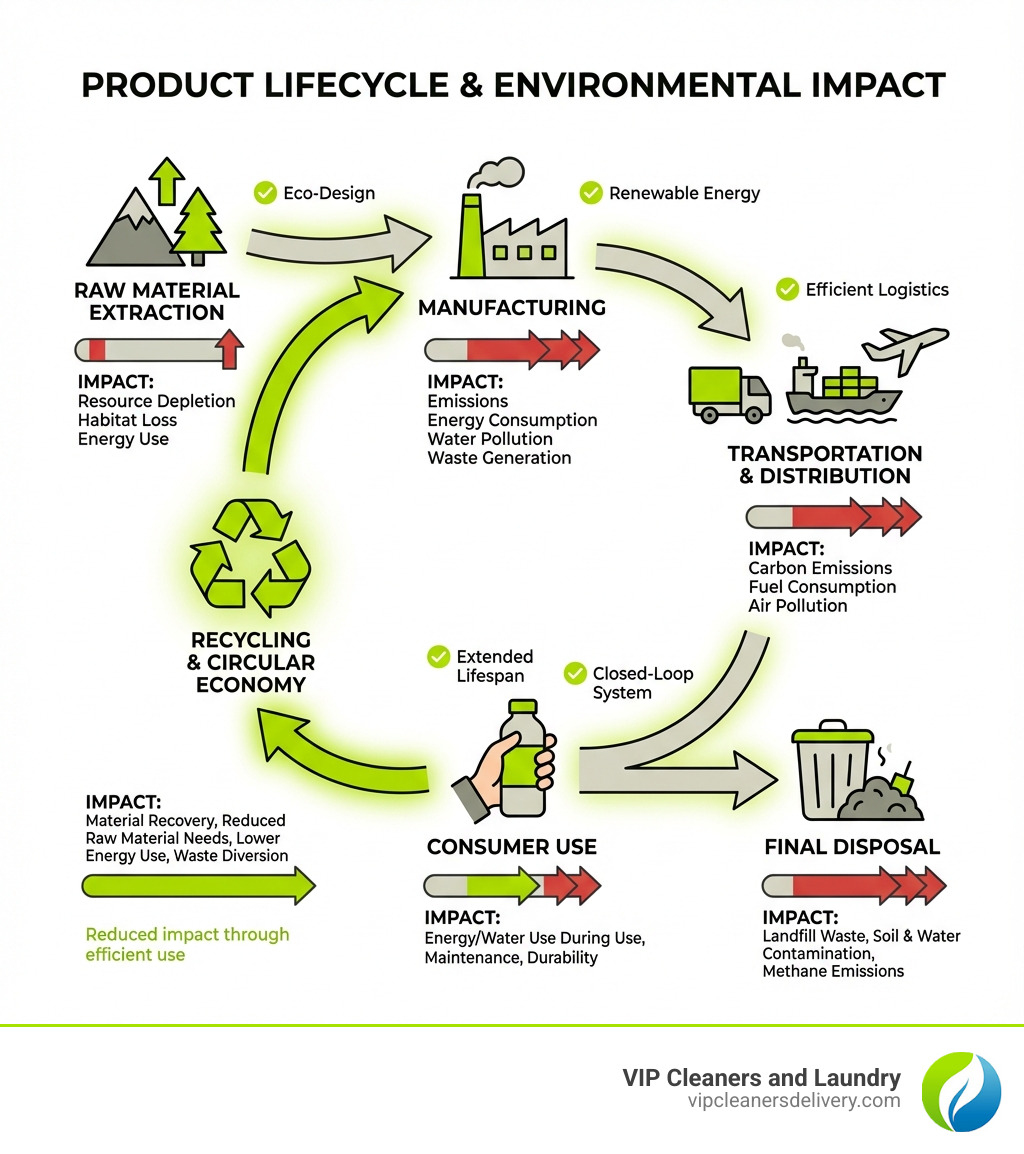
- Minimal environmental impact throughout its entire lifecycle—from raw materials to disposal
- Specific, verifiable claims backed by third-party certifications (not just vague marketing language)
- Transparent practices regarding ingredients, manufacturing, and supply chain
- Reduced resource use including water, energy, and harmful chemicals
- Sustainable end-of-life options like biodegradability or recyclability
The problem? There’s no single standard for what “eco-friendly” means, and companies know it. According to the FTC’s Green Guides, products labeled eco-friendly must explain why they’re environmentally responsible—yet many don’t. When surveyed, 65% of consumers think “green” means environmentally friendly, but experts often prefer the term “sustainable” because virtually no product is entirely free of environmental impact.
This creates confusion. And confusion creates opportunity for greenwashing—when companies make misleading environmental claims to appear more responsible than they actually are.
Whether you’re buying cleaning products, clothing, or choosing a laundry service, understanding what’s truly eco-friendly helps you make informed decisions that align with your values. It’s not about being perfect. It’s about seeing through the marketing noise and supporting businesses that are genuinely working to reduce their environmental footprint.
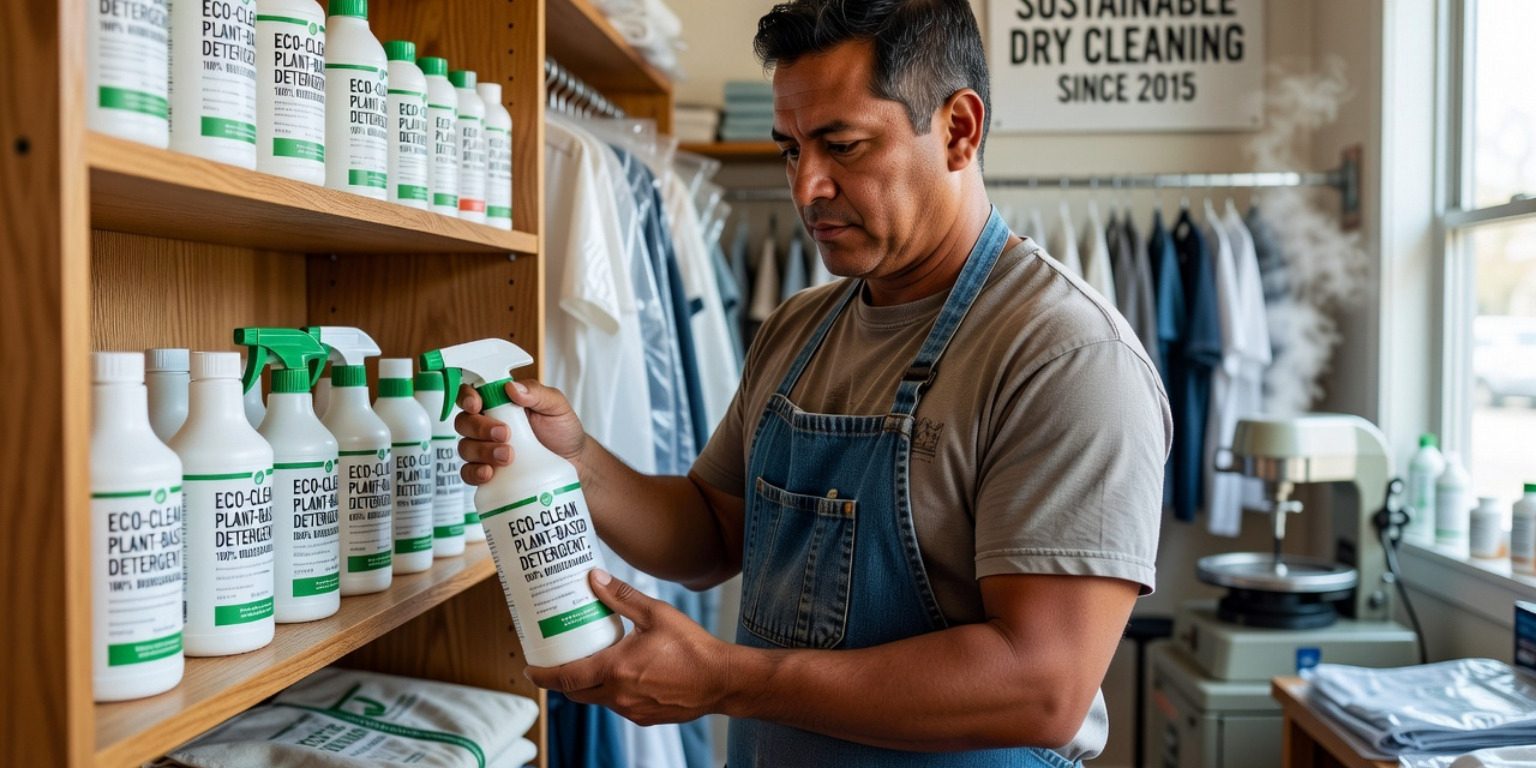
I’m Salvador Villarreal, owner of VIP Cleaners and Laundry, where I’ve spent over 25 years implementing truly eco-friendly practices in garment care—from biodegradable detergents to energy-efficient equipment that meets real environmental standards. After decades in this industry, I’ve learned that “eco-friendly” is more than a label; it’s a commitment to specific, measurable practices that protect both your clothes and our planet.
Key eco-friendly vocabulary:
What Does ‘Eco-Friendly’ Officially Mean?
We often hear the term “eco-friendly” thrown around, but what does it really signify? At its core, the official definition, as provided by Merriam-Webster, is simply: “not environmentally harmful.” This sounds straightforward, doesn’t it? However, the simplicity of this definition belies a complex reality. The term itself is relatively modern, emerging as environmental awareness grew, but its broadness has opened the door for a lot of interpretation—and sometimes, misinterpretation.
An eco-friendly product or practice, in theory, should have no negative impact on the environment. This includes everything from its production process, the materials it’s made from, its use, and its eventual disposal. But achieving a truly “not environmentally harmful” status is incredibly challenging, if not impossible, in our current industrial landscape. Every product, every service, has some footprint.
The Problem with a Simple Definition
The vagueness of “eco-friendly” is precisely where the problem lies. Without clear, universally accepted standards, it often functions more as a marketing term than a scientifically verifiable claim. This is why regulatory bodies like the Federal Trade Commission (FTC) in the United States have stepped in. Their Green Guides state that for a product to be properly labeled as “eco-friendly,” the packaging must explain why it is environmentally responsible. This means general claims like “green” or “earth-friendly” aren’t enough; companies need to provide specific details about what makes their product less harmful. For example, if a product claims to be “recyclable,” the packaging should clarify whether it’s recyclable in local facilities, what percentage is recycled content, and so on.
The challenge is that there isn’t a single, overarching standard that dictates what qualifies as eco-friendly. Different industries, different regions—even different consumers—may have varying ideas of what constitutes a positive environmental impact. This lack of a unified benchmark makes it difficult for both businesses to comply and for consumers to trust.
Eco-Friendly vs. Sustainable vs. Green
To steer this linguistic maze, it helps to understand the nuances between similar terms:
| Term | Meaning | Nuance/Usage |
|---|---|---|
| Eco-Friendly | “Not environmentally harmful.” | This is the broadest term and, as we’ve discussed, can be vague and prone to misuse. It implies a product or practice causes no damage, which is a high bar to meet. Our commitment at VIP Cleaners and Laundry is to actively reduce harm, which moves us closer to this ideal. |
| Sustainable | Meeting the needs of the present without compromising the ability of future generations to meet their own needs. | Often preferred by environmental experts, “sustainable” implies a continuous, long-term balance. It might refer to a single good attribute of a product (e.g., sustainably sourced cotton) rather than claiming the entire product is without impact. It encourages a holistic view of a product’s lifecycle. |
| Green | Generally synonymous with environmentally friendly and eco-conscious practices. | This term is widely understood by consumers—65% of those surveyed believe it means environmentally friendly. However, it’s also highly susceptible to greenwashing due to its vagueness and positive connotations. |
While all these terms aim for a positive environmental outcome, “sustainable” is often seen as a more accurate and responsible term by experts because it acknowledges that most human activities have some impact. The goal is to minimize that impact and ensure resources are available for the long haul. When we talk about eco-friendly dry cleaning and laundry in San Diego, we’re striving for sustainable practices that genuinely lessen our environmental footprint.
The Greenwashing Trap: How to Spot Deceptive Marketing
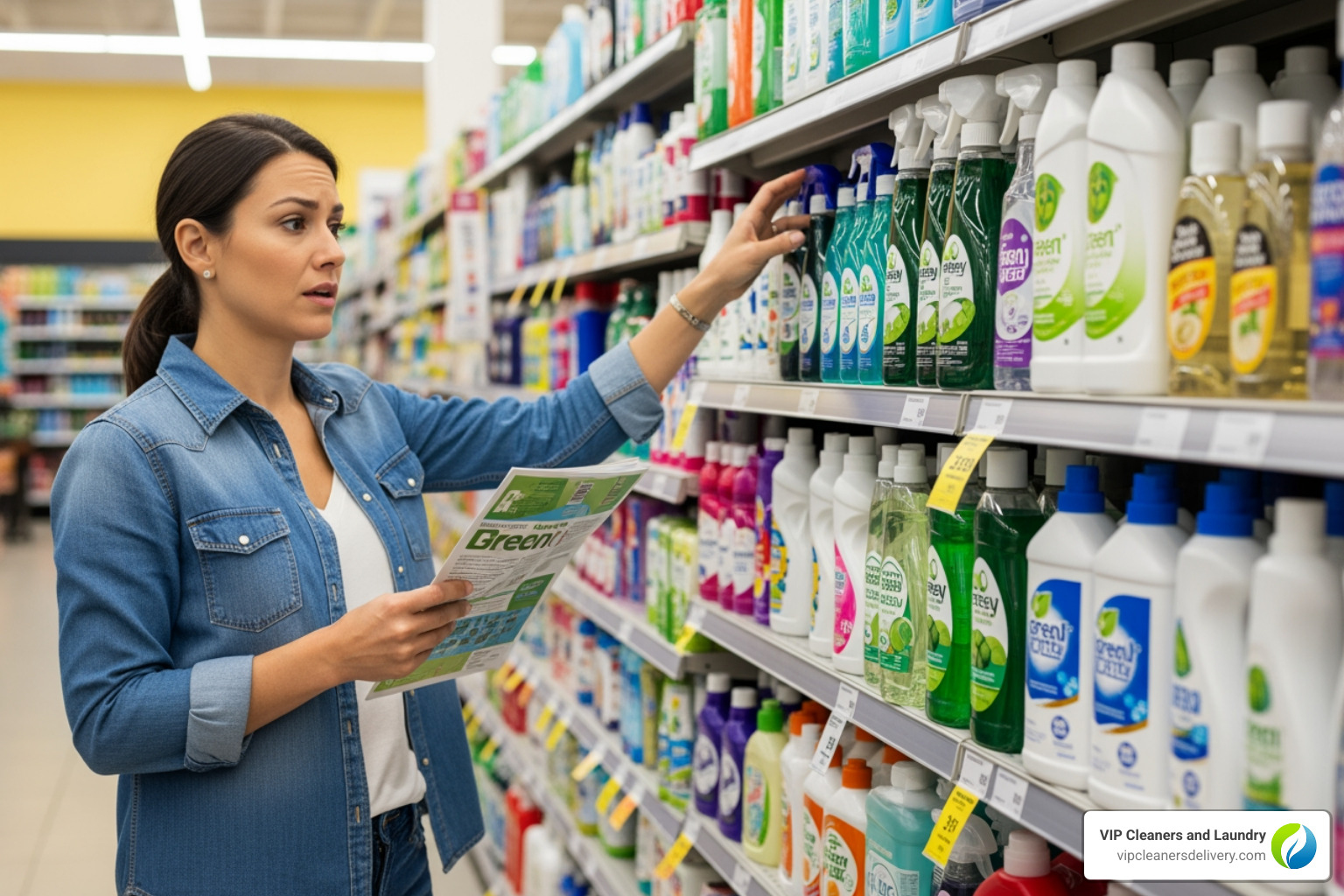
To make better choices for the planet, we often encounter a deceptive practice known as greenwashing. This is when a company makes misleading or unsubstantiated claims about the environmental benefits of its products, services, or practices to appear more eco-friendly than they actually are. It’s a marketing tactic designed to capitalize on growing consumer demand for sustainable options, often without genuine commitment to environmental stewardship.
Greenwashing can be incredibly frustrating because it erodes trust and makes it harder for us to identify and support truly responsible businesses. Companies might use vague language, misleading symbols, or even outright false claims to create an illusion of environmental responsibility.
Common Greenwashing Tactics
Spotting greenwashing requires a keen eye and a healthy dose of skepticism. Here are some common tactics companies employ:
Vague Terms: Companies often use ambiguous words like “natural,” “eco-safe,” “earth-friendly,” or simply “green” without providing any specific details. For example, a product labeled “all-natural” might sound good, but as we’ll discuss, “natural” doesn’t always equate to eco-friendly. The FTC Green Guides emphasize that such broad claims are only valid if they can be substantiated with specific environmental benefits.
Irrelevant Claims: A company might highlight an eco-friendly attribute that is either legally mandated or already standard practice. For instance, labeling a laundry detergent “phosphate-free” was once a meaningful claim, but phosphates have been banned in detergents for years, making the claim irrelevant now. It sounds good, but it’s not actually an extra effort by the company.
Hidden Trade-Offs: This tactic involves emphasizing one eco-friendly aspect of a product while ignoring more significant environmental issues. A product might be packaged in recycled materials, for example, but its manufacturing process could be highly polluting or energy-intensive.
Fake Labels and Nature Imagery: Be wary of official-looking “eco-labels” that are actually self-created by the company. If a product has a green logo that says “earth friendly” but doesn’t correspond to a recognized third-party certification, it might just be a marketing ploy. Similarly, using green colors, leaf motifs, or images of pristine nature on packaging can create an eco-friendly facade without any real substance. You can find more examples of misleading environmental claims on the FTC’s website.
The “All-Natural” Misconception: Many assume “natural” automatically means eco-friendly. However, the processing of some natural materials can be highly detrimental. For instance, bamboo, a fast-growing plant, requires significant chemical processing to turn it into soft fabric (rayon), which can involve toxic chemicals. Similarly, some “natural” ingredients in cleaning products might still be harmful if released into waterways.
Your Toolkit for Verification
The good news is that we, as consumers, have powerful tools to combat greenwashing and make truly informed choices:
Look for Third-Party Certifications: This is arguably the most reliable way to verify eco-friendly claims. Independent organizations rigorously test and audit products and processes against strict environmental standards. We’ll dig into specific certifications in the next section, but generally, a recognized seal indicates a higher level of credibility.
Read Ingredient Lists and Product Details: Don’t just glance at the front of the package. Turn it over and examine the ingredient list. Look for transparency regarding sourcing, manufacturing, and chemical composition. For cleaning products, we always recommend checking for specific details, as highlighted in our guide to eco-friendly cleaning products.
Scrutinize Packaging Materials: Is the packaging minimal? Is it made from recycled content? Is it easily recyclable in our local San Diego facilities? Packaging is a clear indicator of a company’s commitment to reducing waste.
Research Company Reputation: A quick online search can reveal a lot about a company’s environmental track record. Look for sustainability reports, public commitments, and any past controversies. Companies that are genuinely eco-friendly are often transparent about their practices and eager to share their progress. At VIP Cleaners and Laundry, we pride ourselves on our commitment to sustainable practices and transparency in our dry cleaning and laundry processes, serving the San Diego community, including Point Loma, Pacific Beach, Mission Valley, La Jolla, Poway, and UTC.
A Shopper’s Guide to Genuinely Eco-Friendly Products

Making eco-friendly choices doesn’t have to be overwhelming. It’s about shifting our mindset from a “take-make-waste” approach to one that accepts a circular economy. This means thinking about the entire lifecycle of a product: how it’s made, how long it lasts, and what happens to it after we’re done. By being mindful about our purchases, opting for second-hand items, choosing reusable alternatives, and prioritizing recycled materials, we can significantly reduce our environmental impact here in San Diego and beyond.
Look for Trustworthy Certifications
Certifications are our best allies in identifying genuinely eco-friendly products. They act as independent verifiers, ensuring that products meet specific environmental and social standards. Here are some key certifications to look for:
- EPA Safer Choice: This label from the U.S. Environmental Protection Agency identifies products with safer chemical ingredients, without sacrificing quality or performance. We look for this in many of our eco-friendly cleaning products.
- USDA Biobased: Products with this certification contain a verified amount of renewable biological ingredients, distinguishing them from petroleum-based alternatives.
- Fair Trade Certified: This certification ensures that products are produced under fair labor conditions and that farmers and workers receive fair compensation. This is crucial for ethical sourcing, especially for ingredients like those found in natural textiles. You can learn about Fair Trade Certified ingredients to understand its impact.
- B-Corp Certification: While not solely an environmental certification, B-Corp certified companies meet high standards of verified performance, accountability, and transparency on factors from employee benefits and charitable giving to supply chain practices and input materials. It signifies a holistic commitment to social and environmental responsibility.
- EcoCert Cosmos: Specifically for organic and natural cosmetics, this certification guarantees that products meet strict environmental criteria for ingredients, manufacturing, packaging, and waste management.
These labels provide peace of mind, assuring us that the claims made on the packaging have been independently verified.
How to make your laundry and clothing care more eco-friendly
This is where we at VIP Cleaners and Laundry truly shine! Your clothing care routine can have a significant environmental impact, from water and energy consumption to chemical runoff and microplastic pollution. But there are many ways to make it more eco-friendly:
- Wash Less: Simple but effective! Unless an item is visibly dirty or smelly, consider airing it out or spot cleaning instead of a full wash. This saves water, energy, and extends the life of your garments.
- Cold Water Washing: Modern detergents are highly effective in cold water. Washing in cold water significantly reduces the energy needed to heat water, making it a simple yet impactful eco-friendly choice.
- Avoiding Microplastics: Synthetic fabrics like polyester and nylon shed microplastics when washed, which end up in our oceans. If you own clothes made from recycled plastic (a great eco-friendly choice in itself!), consider using a washing bag (like GUPPYFRIEND) to catch these tiny fibers before they enter the wastewater system.
- Sustainable Detergents: Choose plant-based, biodegradable detergents free of harsh chemicals, phosphates, and artificial fragrances. Many brands now offer concentrated formulas that reduce packaging waste.
- Air Drying: Whenever possible, air dry your clothes. Tumble dryers are energy hogs. Hanging clothes to dry saves energy, reduces static, and is gentler on fabrics.
- Repairing Clothes: Fast fashion encourages us to discard clothes after a few wears. Instead, mend minor tears, replace buttons, or get items altered. Giving a garment new life is always more eco-friendly than buying new, even if the new item is made from recycled materials, due to the resources required for production.
At VIP Cleaners and Laundry, we are proud to offer eco-friendly dry cleaning and eco-friendly laundry service here in San Diego. We use state-of-the-art, non-toxic cleaning methods and biodegradable detergents that are safe for your clothes and the environment. We’re committed to sustainable style: how our dry cleaner in San Diego keeps your fashion footprint light. As the winner of Best of San Diego Magazine 2025, we ensure our practices meet the highest standards. Learn more about the ultimate guide to eco-friendly dry cleaning in sunny San Diego and why we are an eco-friendly laundry company you can trust. Our dry cleaners are eco-friendly because we invest in processes that protect our local environment.
Innovations in Product and Packaging Design
The future of eco-friendly consumption lies in embracing circular economy principles. A circular economy intends to stop waste from being created in the first place, a complete 180 from our current “take-make-waste” economy, where we take materials, create products, and then trash them. Learn about the circular economy and how it’s shaping product design:
- Refillable Models: Brands are designing products for reuse and refilling. For example, Izzy Beauty offers zero-waste mascara where you can mail empty tubes back for refilling in reusable envelopes. Similarly, We Are Uni’s body care line uses 100% recyclable and reusable aluminum bottles that are returned to the company.
- Minimal Packaging: Choose products that come with little to no packaging, or packaging made from recycled and easily recyclable materials like cardboard and aluminum. Bar soaps, for instance, are often a great option as they typically have minimal wrapping.
- Concentrated Products: Opt for concentrated cleaning and health products that you dilute at home. This significantly reduces the amount of packaging and water transported, lowering carbon emissions. Brandless Cleaning Concentrates are a good example, allowing you to use reusable containers.
- Reusable Items: Switching to reusable bags for groceries, reusable sandwich bags (like those made by Stasher), and beeswax food wraps can replace hundreds of single-use plastic items that would otherwise end up in landfills.
These innovations show that it’s possible to design products that are both effective and genuinely eco-friendly, reducing waste at every stage.
Frequently Asked Questions about Eco-Friendly Choices
As we dig deeper into making eco-friendly choices, certain questions consistently arise. Let’s address some common queries to help clarify our understanding.
What is the biggest misconception about eco-friendly products?
The biggest misconception is often that “natural” automatically means eco-friendly. While natural ingredients can be a good starting point, the truth is far more complex. As mentioned earlier, the processing of some natural materials, like bamboo into rayon fabric, can involve toxic chemicals. A product might be derived from nature, but if its cultivation requires excessive water or pesticides, or its change into a usable product creates significant pollution, it’s not truly eco-friendly.
This highlights the importance of a lifecycle assessment – evaluating the environmental impact of a product from raw material extraction, through manufacturing, transportation, use, and disposal. It’s not just about the source material, but the entire journey. When we choose eco-friendly cleaning solutions for your garments, we’re looking at these holistic impacts, ensuring that from start to finish, our methods minimize harm.
How do regulations differ globally?
Environmental regulations and approaches to eco-friendly claims vary significantly across the globe. While we operate under the guidelines of the FTC Green Guides here in the U.S., other regions have their own frameworks. For example, Europe has initiatives like the EU Ecolabel and the Eco-Management and Audit Scheme (EMAS), which set standards for products and organizational environmental performance.
The Energy Star program, which certifies energy-efficient products, is an international program with a strong presence in the U.S. and other countries, including Australia and the EU. This program helps us identify appliances and electronics that consume less energy, reducing our carbon footprint regardless of where we are.
While specific regulations can differ, the underlying goal across these frameworks is to prevent greenwashing and provide consumers with credible information. For us in San Diego, adhering to U.S. standards and looking for internationally recognized certifications like Energy Star helps us ensure our practices and recommendations are genuinely eco-friendly.
Can one person’s choices really make a difference?
Absolutely, yes! It’s easy to feel overwhelmed by the scale of environmental challenges and wonder if individual actions matter. But collective impact is built from individual choices. Every time we choose an eco-friendly product, support a sustainable business, or adopt a greener habit, we contribute to a larger movement.
Consider these impacts:
- Reducing Waste: While specific statistics might vary by region, globally, food waste is a massive contributor to greenhouse gas emissions. By planning meals, using leftovers, and composting, we reduce demand for new production and divert waste from landfills. Similarly, the fashion industry generates millions of tons of textile waste annually. Choosing to repair, reuse, or recycle clothes, or opting for eco-friendly dry cleaning, directly combats this issue.
- Shifting Demand: Our purchasing decisions send a powerful message to businesses. When we demand truly eco-friendly products and services, companies are incentivized to invest in sustainable practices and innovate greener solutions.
- Inspiring Others: Our choices can inspire friends, family, and colleagues to adopt similar habits, creating a ripple effect.
Every small step, from bringing reusable bags to opting for eco-friendly dry cleaning, adds up. Your choices have a real impact on our local environment in San Diego, from our beaches to our canyons, and contribute to a healthier planet for everyone.
Conclusion
Navigating “eco-friendly” products and services can feel like a maze, filled with confusing labels and misleading claims. But as we’ve explored, by understanding the official definition, recognizing greenwashing tactics, and knowing what to look for in genuine certifications, we can move beyond the label to make truly informed decisions.
The journey towards a more eco-friendly lifestyle is about embracing lifecycle thinking—considering the entire impact of a product from its creation to its disposal. It’s about making conscious choices, whether that’s in the products we buy, the food we eat, or the way we care for our clothes. These small changes, when multiplied across our communities in San Diego, from Point Loma to UTC, can lead to a big, positive impact on our environment.
At VIP Cleaners and Laundry, we’re proud to be part of your eco-friendly journey. We believe that caring for your clothes shouldn’t come at the expense of the planet. That’s why we’ve dedicated ourselves to providing top-notch dry cleaning and laundry services using methods that are genuinely eco-friendly. We’re honored to have been recognized as the Best of San Diego Magazine 2025 winner, a testament to our commitment to both quality and sustainability. We are San Diego’s choice for sustainable garment care, ensuring your clothes are impeccably clean while protecting our precious environment.
Learn more about our eco-friendly dry cleaning methods and join us in making a difference, one garment at a time.