Clean Green: How to Achieve Zero Waste in Your Laundry Routine
Why Zero Waste Dry Cleaning Matters for Your Health and the Planet
Zero waste dry cleaning is a sustainable approach to professional garment care that eliminates toxic chemicals, reduces plastic packaging, and minimizes environmental harm. Here’s what you need to know:
Quick Answer: Zero Waste Dry Cleaning Options
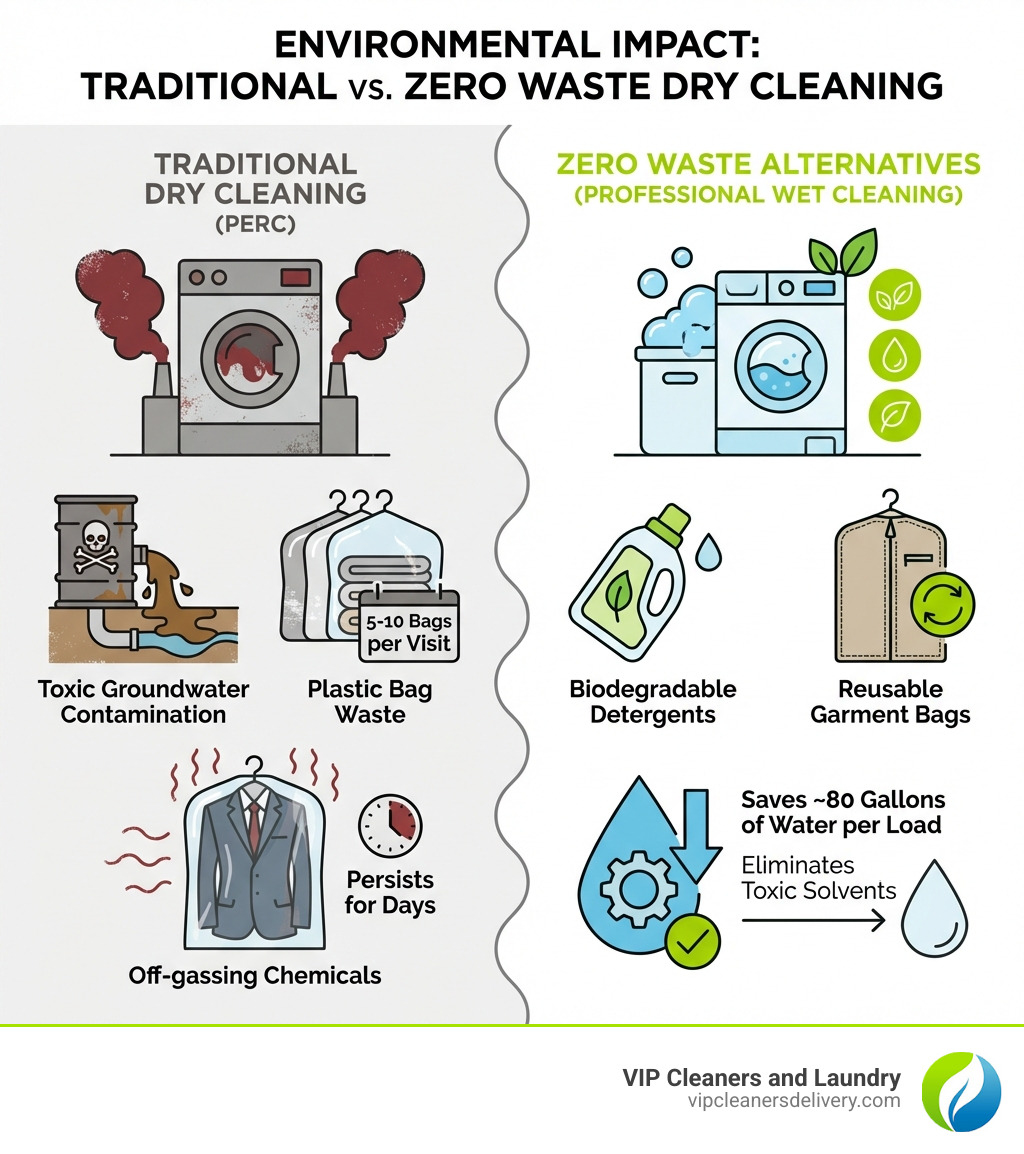
- Professional Wet Cleaning – Water-based cleaning with biodegradable detergents in specialized machines
- Liquid CO2 Cleaning – Uses recycled carbon dioxide instead of toxic solvents
- Hydrocarbon/Silicone Solvents – Non-toxic alternatives like DF2000 that don’t contaminate groundwater
- Home Care Methods – Steaming, spot cleaning, and hand washing to reduce cleaning frequency
- Reusable Packaging – Deposit-based garment bags and hanger recycling programs
The reality is sobering: more than 80% of dry cleaners across North America still use perchloroethylene (PERC), a chemical classified as “probably carcinogenic to humans” by the International Agency for Research on Cancer. Beyond health risks, traditional dry cleaning creates mountains of plastic waste—those individual garment wrappers, bags, and wire hangers that end up in landfills.
But here’s the good news: sustainable alternatives exist and work beautifully.
As one frustrated professional put it: “But HOLY FUCKIN SHIT, THE PLASTIC. No matter how many times I ask them to put as many garments in each wrapper as possible, I always get the clothes back with each suit in one wrapper, and 2-3 shirts in another.”
This frustration is valid—and solvable.
Whether you’re concerned about PERC residues off-gassing from your wool suit for up to a week, worried about microplastic pollution, or simply tired of throwing away plastic bags, zero waste dry cleaning offers practical solutions. Professional wet cleaning can handle most “dry clean only” items safely. Innovative technologies like liquid CO2 use captured industrial emissions instead of toxic solvents. Even simple home care methods—steaming, vodka sprays for odor control, and proper airing—can dramatically reduce how often you need professional cleaning.
The transition doesn’t require perfection. Small changes add up: returning hangers to your cleaner, requesting no plastic wrap, choosing natural fibers that need less frequent cleaning, or finding a local service that uses reusable garment bags with deposit systems.
I’m Salvador Villarreal, and over my 25+ years in the dry cleaning industry, I’ve witnessed the shift toward sustainable practices and implemented cutting-edge zero waste dry cleaning technologies at VIP Cleaners and Laundry, earning us recognition as Best of San Diego Magazine 2025. My goal is to help you maintain your professional wardrobe without compromising your health or the environment.
Zero waste dry cleaning terms at a glance:
The Environmental Cost of Traditional Dry Cleaning
When we talk about traditional dry cleaning, the term “dry” is actually a bit of a misnomer. As noted by HowStuffWorks.com, the process isn’t dry at all; it simply avoids water, replacing it with chemical solvents. The most common of these is Tetrachloroethylene, or PERC.
The Environmental Protection Agency report on PERC health risks highlights that this solvent is a Volatile Organic Compound (VOC) that can cause respiratory irritation, dizziness, and headaches. For those living in residential buildings above dry cleaners, the risks are even higher, leading to strict Canadian government regulations on PERC waste and similar phase-outs in the U.S. to prevent indoor air and groundwater contamination.
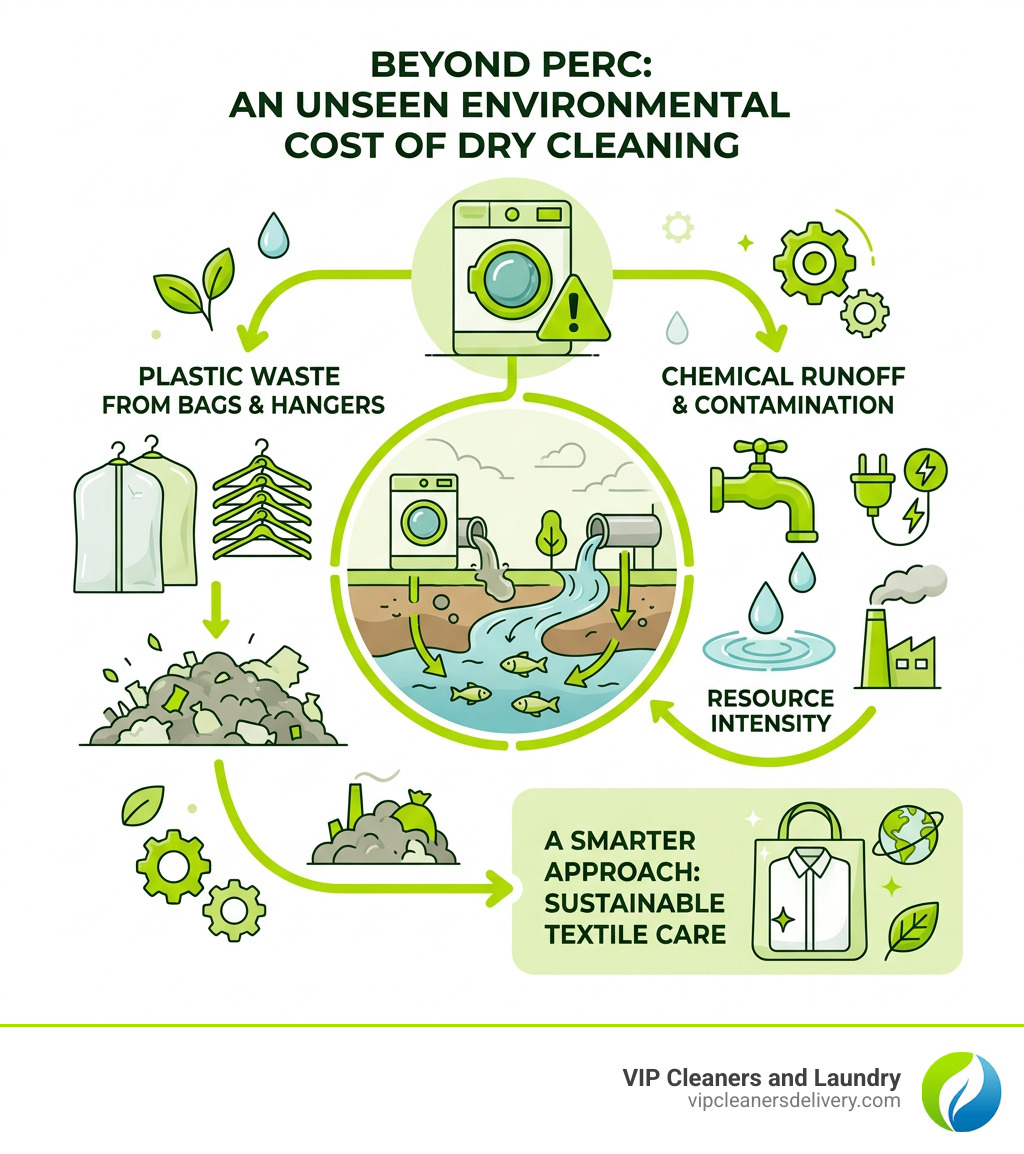
Beyond the chemicals, the “plastic mountain” is a massive hurdle for the circular economy. Every time you pick up a suit, it comes wrapped in a thin poly-bag. These bags are rarely recycled and often contribute to microplastic pollution. In fact, research shows that people in some regions are ingesting significant amounts of microplastics, partly from laundry-related sources. Furthermore, it can take up to a week for a wool garment to release or off-gas just half of the PERC it absorbed during the cleaning process—meaning those chemicals stay in your closet and your home long after you’ve left the shop.
Professional Alternatives for Zero Waste Dry Cleaning
Fortunately, the industry is evolving. We have moved toward methods that prioritize both your health and the planet. If you are looking for zero waste dry cleaning, you should look for cleaners that utilize the following technologies:
| Feature | PERC (Traditional) | Professional Wet Cleaning | Liquid CO2 |
|---|---|---|---|
| Solvent | Tetrachloroethylene | Water + Biodegradable Soap | Recycled CO2 |
| Toxicity | High (Carcinogenic) | Non-toxic | Non-toxic |
| Waste | Hazardous Sludge | Minimal/Biodegradable | None (Closed Loop) |
| Packaging | Single-use Plastic | Reusable Bag Options | Reusable Bag Options |
More info about eco-friendly dry cleaning can help you understand how hydrocarbon solvents like DF2000 or silicone-based cleaners serve as safer alternatives. For instance, liquid silicone is chemically inert—it doesn’t interact with the fabric but simply carries away the dirt. For a deeper dive, check out the ultimate guide to eco-friendly dry cleaning in San Diego.
Professional Wet Cleaning as a Zero Waste Dry Cleaning Solution
According to the NoDryClean.com guide to professional wet cleaning, this method is perhaps the most sustainable alternative available today. It uses sophisticated, computer-controlled washers that precisely manage water levels, temperature, and mechanical action.
Unlike your home washer, these machines use 100% biodegradable soaps and specialized “fabric tensioning” equipment to prevent shrinkage. Because it uses water—the universal solvent—it is incredibly effective at removing organic stains and odors without leaving behind any chemical residues. It’s safe for the air, the soil, and your skin.
Innovative Technologies in Zero Waste Dry Cleaning
Another “holy grail” of sustainable garment care is Liquid CO2 cleaning. This process uses pressurized carbon dioxide captured from existing industrial processes. It is a closed-loop system, meaning the CO2 is recycled again and again.
As we discuss in our guide to all-natural dry cleaners, liquid CO2 cleaning uses no heat, which extends the life of your clothes by preventing fiber degradation. It’s also excellent for technical gear like GORE-TEX or high-loft down jackets, as it doesn’t strip away natural oils or performance coatings.
Strategies to Eliminate Plastic Waste from Your Cleaner
Even if you use an eco-friendly solvent, the plastic packaging remains a problem. Here is how we can work together to eliminate it:
- Reusable Garment Bags: Many forward-thinking cleaners (including us!) offer reusable “The Green Garment Bag” or similar carriers. You drop off your dirty clothes in the bag, and we return them to you in the same bag—no plastic wrap required.
- Hanger Recycling: Don’t let wire hangers clutter your closet or the landfill. Return them to us! We can sanitize and reuse them, or ensure they are properly recycled.
- The “No Plastic” Request: You can simply ask us to omit the poly-bags. If you’re picking up your clothes and going straight to your car, your garments will be perfectly fine for the short trip.
- Repurposing at Home: If you do end up with a plastic bag, give it a second life. They make excellent trash liners for small bathroom bins or can be used by artists to cover wet pottery to prevent cracking.
Check out our eco-friendly laundry company practices to see how we’re leading the charge in San Diego. For more tips, our complete guide to eco-friendly cleaning covers everything from detergents to delivery.
Frequently Asked Questions about Eco-Friendly Garment Care
Is green dry cleaning more expensive?
While the specialized machinery and biodegradable detergents can cost more for the business to operate, the price for the consumer is usually comparable to traditional cleaning. When you factor in the “hidden costs”—such as the health impact of PERC and the fact that eco-friendly methods often help your clothes last longer—green cleaning is the clear winner for your wallet in the long run. Learn more about dry cleaners eco-friendly options and how they compare.
How do I find a truly zero-waste cleaner?
Look for transparency. A truly eco-friendly cleaner will be happy to tell you exactly what solvents they use (look for “Wet Cleaning,” “CO2,” or “Silicone”). They should also offer a hanger recycling program and reusable bag options. You can evaluate these eco-friendly laundry service features when choosing your partner in garment care.
Conclusion
Transitioning to a zero waste dry cleaning routine doesn’t happen overnight, but every small step—from using a vodka spray at home to switching to a PERC-free professional—makes a difference. At VIP Cleaners and Laundry, we are proud to serve the San Diego community, from Pacific Beach to Mission Valley and beyond.
Our commitment to sustainability and excellence is why we were named Best of San Diego Magazine 2025. We make it easy for you to go green with our free pickup and delivery and same-day service. Ready to experience the future of garment care? Schedule your zero-waste dry cleaning today and let us help you keep your wardrobe—and our planet—looking its best.